
Take
Action
Seattle Moves to Eliminate Environmental Oversight
Despite the overwhelming majority of public comments being against CB 121215, five members of Council chose to ban environmental appeals of the largest type - the mayor has rushed through the signing. It squeaked by with one vote.
This means the largest city actions will no longer be subject to appeal before the damage is done. Like a labor negotiation, when talks break down you have the ability to strike. Appeals are the same way, they are used when talks break down and there are still massive mistakes in environmental documents. Appeals can still be filed after the damage is done through much more expensive and slower avenues more narrowly limited to fish habitat - this will not speed up housing.
Overwhelming numbers of people try to protect the environment as we densify and are ignored for a handful of wealthy special interest groups that mobilize canned messages. Scientific evidence shows no loss of density when protecting green space and trees. NOAA Recovery Plans recommend protecting both urban and rural areas. Salmon don't just skip over Seattle into pristine waters.
CM Juarez: "I don't believe that appeals are holding up housing production. I think it's a false narrative. I think it's a false equation. I don't think they always equal lack of housing production and to pit those two against each other to me is just I think it's intellectually not correct. I don't want to say dishonest because I can understand why people take that position but I don't agree with that. I cannot make the connection between or unequivocal statement that the appeals stop housing production... as a legislator not as a judge, not as legal counsel, but as a is a legislator for the city of Seattle, I have to err on the side of more because that's due process and that is that's what the people want."
CM Saka: "Housing and accountability are not competing values, housing and public trust are not competing values. We can build more homes while preserving confidence that the city has done its work carefully transparently and lawfully, In fact, public trust helps make lasting durable housing policy possible. This amendment serves to address the concerns about significant delays... hundreds and hundreds, 756 emails my office received sent that specifically mentioned CB121215 received... Hundreds more, hundreds upon hundreds upon hundreds mention SEPA and the appeal process. The overwhelming majority of those roughly 80% are oppose the underlying legislation... I haven't done the tally but the perception of the public that is that these the base legislation erodes a right and whether we agree with that perception or not... I think my proposal strikes a balanced approach."
We have been harassed, threatened with dwelling protests, veiled death threats, and mischaracterized without supporting information.
While the Orca Appeal was verbally spared from this ban, the city is embarking on yet another larger phase of zoning than what was already not studied in the original environmental impact statement… that still stands uncorrected.
How will City Council know they’ve got the best available environmental information in front of them?
council@seattle.gov, mayor@seattle.gov
Dear Mayor Wilson and City Council:
I am writing to express great disappointment in another failed environmental decision. This bill eliminates a critical check on developers, legislators, and regulators — one that exists to ensure accountability under Washington's environmental laws before any damage has been done. Removing the right to appeal environmental determinations is not a procedural technicality. It is the removal of a meaningful avenue for residents to hold government and private interests accountable when Seattle's environmental standards are at stake.
-Bring back Amendment B (prioritize and shorten appeals to 90 days).
-This bill should not have passed without a Racial Equity Toolkit (RET).
-CM Lin says he'll meet with anyone to prevent hearing examiner appeals - lets see the results of CM Lin's proposed new 'public meeting and public comment plan' before banning public environmental appeals in CB121215.
Mayor Wilson has said this city belongs to all of us. Match these words with action: do not strip residents of their only city recourse to enforce the environmental regulations before damage is done.
Thank you,
Ask Seattle City Council to Protect Clean Water
CB121190 passed with an amendment starting the process for performance metrics thanks to Councilmember Rivera.
Council and SPU will need to know people want accountability for clean water throughout the next 5 year code term.
Seattle’s shared water is being threatened by those who profit most.
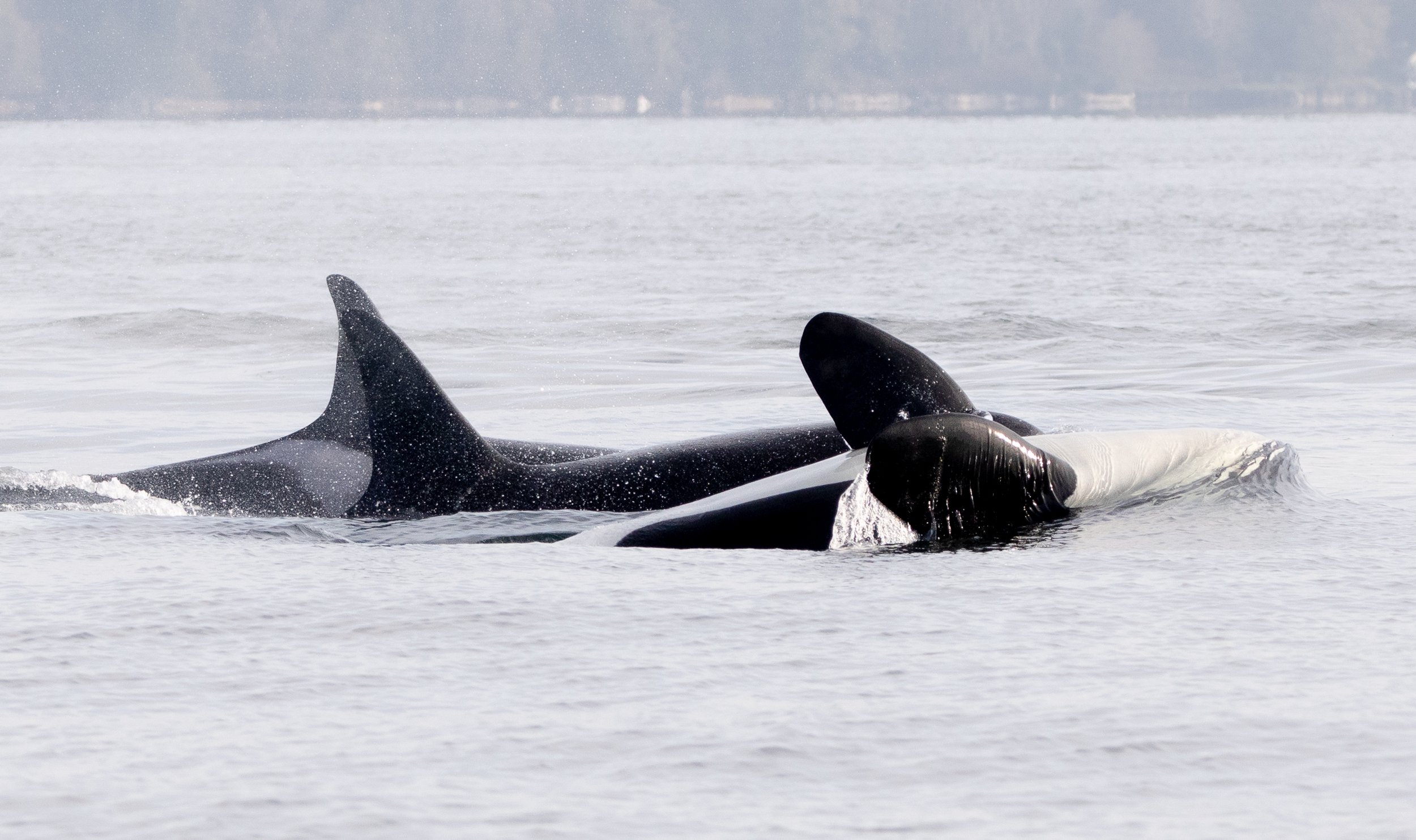
Don’t Pollute Orca Recovery
Letter template and talking points
Please customize for maximum impact
Dear Seattle City Council,
In 2006, Kate Fleming, a resident of Madison Valley in the Central District, drowned in her own basement due to poor stormwater infrastructure. Builders were granted early meetings on this Storm water Code update 7 months before the public. With an unprecedented increase in impervious surfaces in the Comp Plan and CB121093, we need a similar unprecedented increase in storm water regulations. Impervious surfaces generate stormwater pollution which causes adverse impacts to fish, fish habitat, orcas, and humans. Use an extension without penalty from Ecology to resolve the issues below. I support the recital sponsored by Councilmember Rivera to explore increased accountability.
A 60" Doug Fir absorbs 13,499 gallons of storm water annually while a 3" sapling only absorbs 298 gallons annually (2.2%). We need to take a hard look at cumulative impacts. What happens to storm water levels during the 25+ year gap it takes for the baby saplings to catch up to the mature trees' water filtration? The connection between deforestation and drought is well documented (1).
Facts
Impervious (hard) surfaces generate water pollution (but trees/green space reduce, filter, and cool) (KCDNRP);
Polluted runoff is the top source of Puget Sound water pollution (KCDNRP);
Puget Sound Keeper's latest salmon survey showed increased mortality;
NOAA's Southern Resident Orca Recovery Plan recommends highest population areas reduce polluted runoff;
Seattle is the largest city by land and population on Puget Sound (we make the biggest difference);
Puget Sound is a semi-enclosed water body with sills that holds pollutants (Puget Sound Institute UW).
Asks
Add “Performance metrics will include taking samples at outfalls citywide at intervals throughout the year. SPU will practice adaptive management that will lead to adjustments in the code when performance metrics show degradation in water quality at outfalls.” to the proposed Recital.
Remove statement that trees should be 'compatible with construction' - other parts of the code address where to plant trees in relation to construction.
Add Temperature Changes from the state model code SWMMWW.
Allow trees as stormwater managers on all property types (V3, Chapter5, p5-10)
Reject removal of requirements to slow polluted runoff close to small lakes and underserved areas (flow control would not be required for properties over 5000 square feet of hard surface (up from 2000sf) in small lake basins and capacity constrained areas (22.805.050)). When there’s nearly 100% lot coverage with 4-6 luxury homes without shared walls, there will be no room for onsite mitigation planter beds leaving many areas vulnerable to flooding and increasing Combined Sewer Overflows (CSOs). Rarely used roof gardens may be the only mitigation that can fit onsite. If Seattle can’t show the calculations for the difference in impact from the current code to the degraded proposed code, you must institute performance metrics with an annual re-opener with any loss of water quality.
Remove this SEPA Checklist sentence: "Because much of Seattle has been previously developed and its original habitats significantly altered or eliminated, the potential for threatened or endangered animal species to be present in Seattle is low." SRKW and threatened salmon do not currently or historically have low chances of being present.
The SEPA Checklist D.2 says this code update will improve protections for animals. Can Seattle show evidence of impacts assessment and mitigation for when onsite mitigations don’t cover site runoff? What’s Seattle’s plan to right-size offsite detention tanks when onsite mitigations don’t cover site runoff and flooding? This could be scaled based on lot coverage that leaves space for onsite planters and trees for flow control.Have fish or orca biologists weighed in on this? Washington’s largest city shouldn’t reduce protections when endangered species are dwindling. Storm water pollution adversely impacts fish and fish habitat. Migratory species are impacted because even short exposures to 6PPD are harmful.
I request the City show their work and use performance metrics for water quality. Don't degrade regulations that protect water quality. Studies show 1) deregulation does not increase affordability (Storper) and 2) we can have both density and trees (The Nature Conservancy, Lambert et al). Seattle deserves clean water.
Don't pollute orca recovery efforts.
Sincerely,
(1) https://www.sciencedirect.com/science/article/pii/S0022169425011199
(2) 48hills.org/2026/01/new-study-shows-that-deregulation-is-not-the-answer-to-the-affordable-housing-crisis/(3) https://pugetsoundkeeper.org/maps/salmon-survey-results/
