
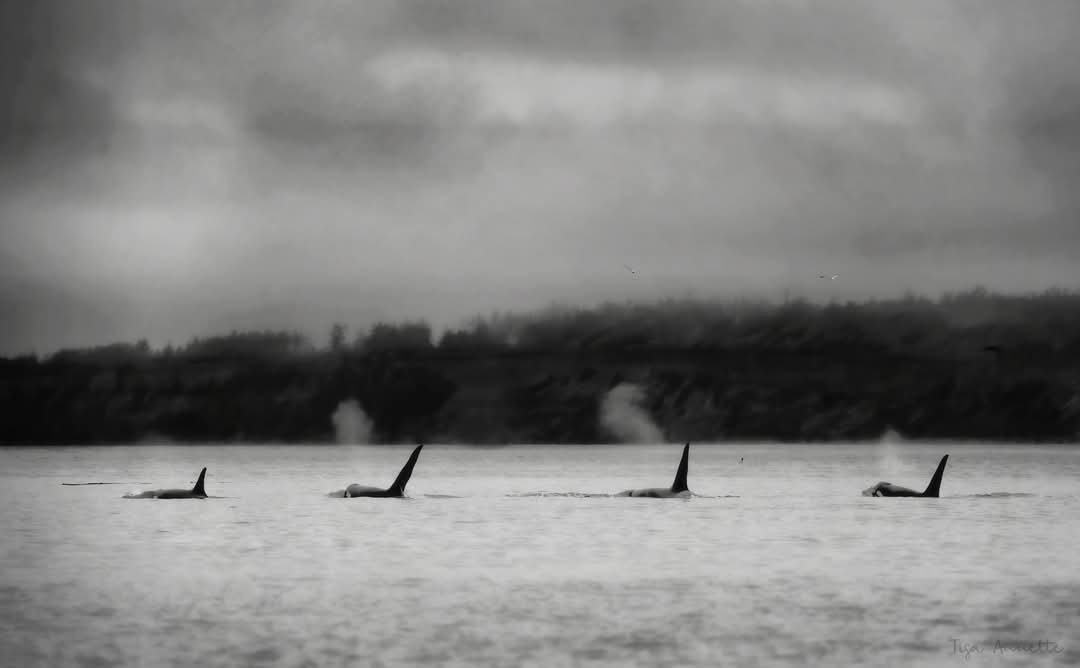
Press
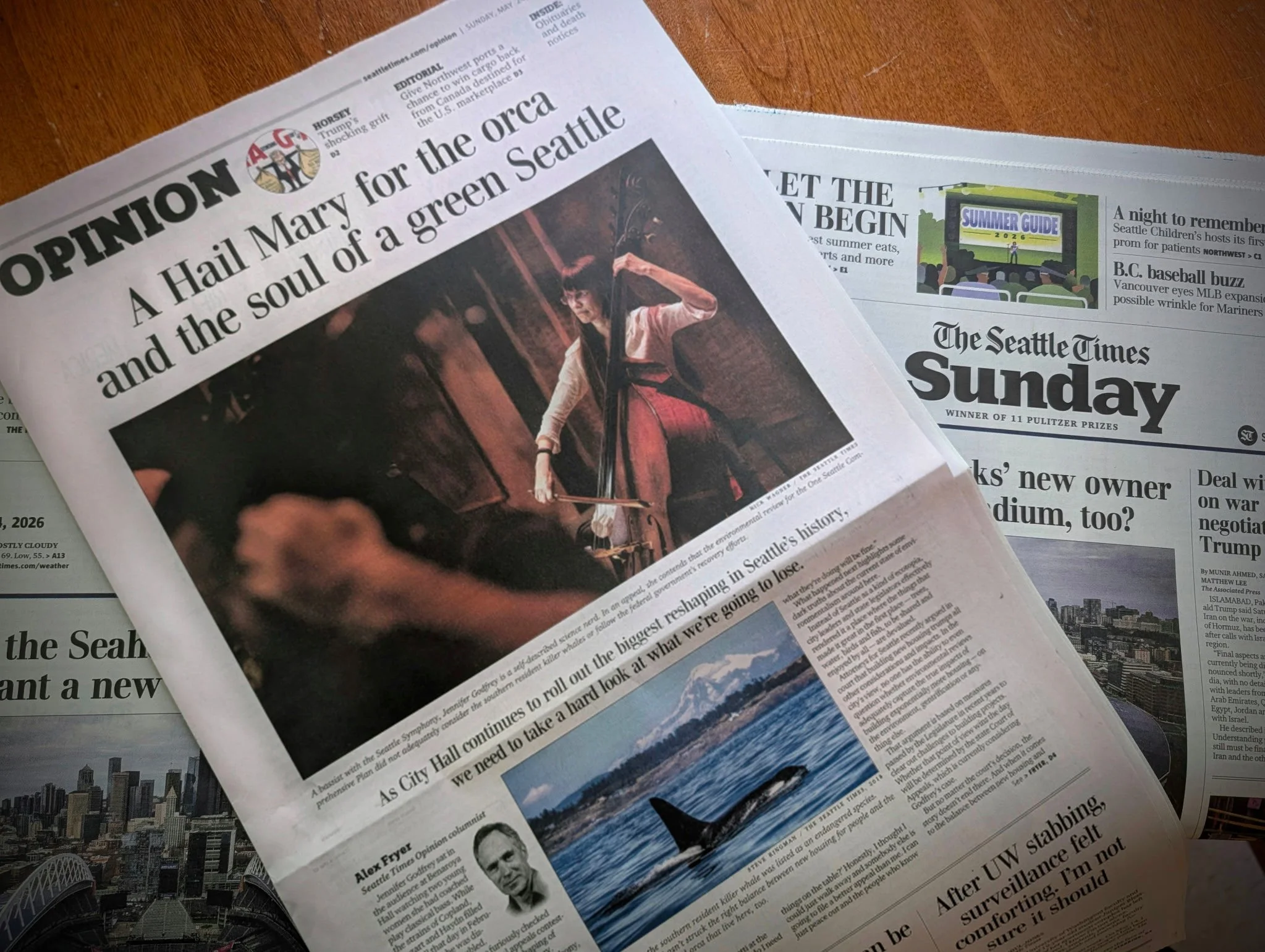
News
Scientific American The Endangered Species Act is getting weaker
Court of Appeals Opinion - Victory for the Orca Appeal
Soundside KUOW Why a Seattle Symphony bassist started a fight with City Hall over housing density and orcas
Seattle Times Editorial Board Seattle an enviro city? Doesn’t seem that way at City Hall
Seattle Times Editorial Board - Seattle City Council should let residents question impacts of growth
South Seattle Emerald - Seattle Residents could lose a key check on environmental reviews
Seattle Times - Seattle likes its eco-friendly cred. But housing plan hides dark truths
KNKX -Environmental Advocates Want More Scrutiny of Seattle’s Development Plan
KOMO News - Seattle Files to Dismiss Orca Protection Appeal Raising Concerns about Southern Residents
Financial Content - City Files for Dismissal as Orca Nexus and Other Environmental Groups Urgently Call for Accuracy in Seattle’s Growth Plan Environmental Review
New Study Shows that Deregulation isn’t the Answer to Housing Crisis
Press Release
Broad coalition of urban sustainability, cetacean, salmon, tree, watershed, and wildlife groups call for accuracy in Seattle’s Comprehensive Plan environmental review.
Seattle - A broad coalition of environmental advocates is calling for an accurate environmental review of Seattle’s Comprehensive Plan—one that includes impacts on the 74 critically endangered Southern Resident Killer Whales (SRKW) in the largest recent environmental legal challenge, the Orca Appeal. To effectively address both housing affordability and climate equity, the City must ensure its 20-year growth plan is based on inclusive and scientifically sound environmental analyses. NOAA’s SRKW Recovery Plan recommends that the highest population cities along Puget Sound reduce polluted stormwater runoff—a major threat to the whales. Trees filter pollutants, cool waterways, and reduce stormwater flow. Yet the City’s adopted plan fails to accurately assess the increased runoff and raw sewage overflows that would likely result from replacing tree canopy with concrete. It also omits meaningful comparison between “concrete-heavy” luxury development and more affordable orca-friendly alternatives, such as “concrete-light” middle housing (such as stacked flats and building renovations) that preserve green space and mature trees.
The coalition brings together urban sustainability, orca, cetacean, salmon, bird, urban tree, watershed, and wildlife experts. Twelve organizations and experts, including Orca Conservancy, Birds Connect Seattle, the American Cetacean Society (Puget Sound Chapter), Oceanic Preservation Society, Orca Network, and Thornton Creek Alliance signed an Amicus Brief urging the City to protect both the public right to appeal and the environment by reinstating the Orca Appeal to protect our ecosystem and endangered species as we densify. These comments were echoed in the City’s public outreach for the plan.
In April, the City of Seattle’s Hearing Examiner dismissed the Orca Appeal concerning the Final Environmental Impact Statement (FEIS) for the City’s growth plan, the "One Seattle Plan.” The Orca Appeal centered on the FEIS’s failure to assess impacts to Southern Resident Killer Whales from increased polluted stormwater runoff. The SRKW were listed as endangered in 2005 with just 83 individuals and have further declined to just 74 today. The One Seattle Plan will further reduce canopy coverage following years of the City’s failure to achieve canopy goals. According to the appellant, this dismissal effectively removes the public right to use the long established appeal process on an inadequate EIS, setting a dangerous precedent. The City has acted in bad faith by continually requesting extensions and then declaring mootness in attempts to prevent the in person argument.
The Orca Appeal is scheduled for argument on March 4th before the Washington State Court of Appeals, Case No. 882520.
Shari Tarantino, Executive Director of Orca Conservancy: “We cannot talk about a ‘One Seattle’ future without acknowledging that this city exists because of the waters that surround it,” said Shari Tarantino, Executive Director of Orca Conservancy. “Endangered Southern Resident killer whales are a barometer of ecological health. If they are starving or dying from toxins, it means our systems are failing. The Comprehensive Plan must play a decisive role in reversing this decline. It is our moral and legal responsibility.”
Dr. Geof Donovan, Ash & Elm Consulting: “If this appeal fails, the resulting increase in housing density without appropriate mitigation will inevitably reduce urban-tree canopy in Seattle. The consequences will negatively affect the health and well being of all Seattle residents.”
Joshua Morris, Birds Connect Seattle: "The health of Puget Sound and the future of endangered species depend on decisions being made right now," said Joshua Morris of Birds Connect Seattle. "The City must meet its legal obligations to protect wildlife and ensure that its planning process is transparent and evidence-based."
Jennifer Godfrey, Appellant: Seattle’s growth should not come at the expense of the last remaining 74 Southern Resident Killer Whales. This plan will literally pave over orca recovery efforts. It will increase hardscape and facilitate indiscriminate removal of the large trees that provide vital stormwater filtration, without requiring effective mitigation or honest analysis of the ecological consequences. At the same time, the plan will not produce the low income housing needed to solve the housing affordability crisis.”
Orca Nexus was founded in March 2025 to protect critically endangered Southern Resident Killer Whales and the ecosystems they depend on. In under a year, the organization has grown to more than 2,500 supporters and works at the intersection of science, advocacy, and community engagement to advance SKRW protections.
